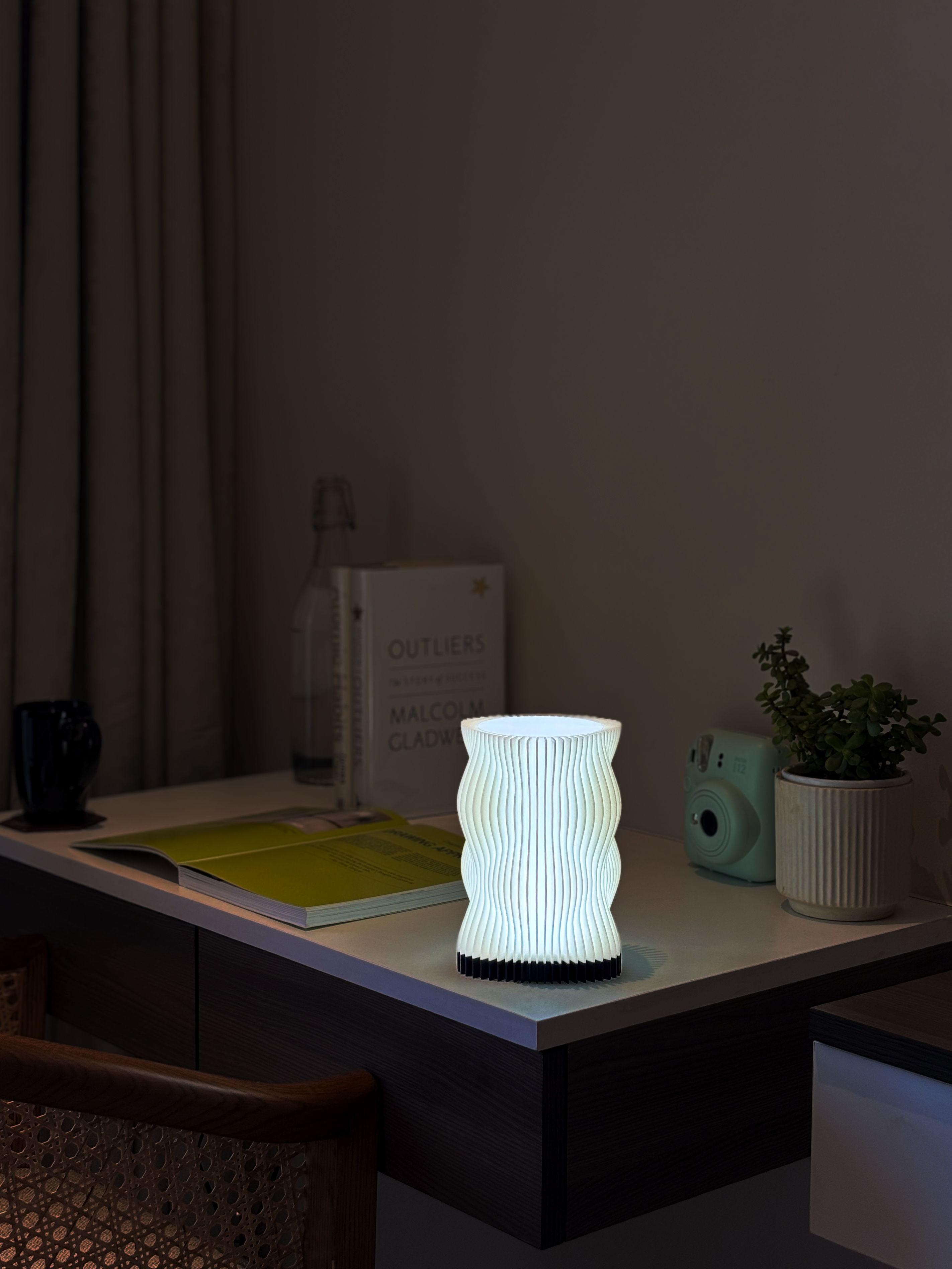
A few years ago, 3D printing belonged to engineers and science fairs. Today, it's reshaping how homes are decorated, furnished, and built. For anyone who cares about considered interiors, that's worth paying attention to.
This isn't about replacing craftsmanship. It's about what happens when technology meets design thinking.
What 3D Printing Actually Is
Traditional manufacturing is subtractive: start with a block, cut away what you don't need. 3D printing works the opposite way. It builds objects layer by layer from a digital file, depositing material only where it's needed.
No waste. No minimum orders. No factory tooling. A design that would cost thousands to manufacture traditionally can be printed for the cost of raw material alone.
What It's Making for the Home
The range is broader than most people realise.
Lighting: Custom fixtures designed to exact dimensions, translucent resins that glow softly, layered geometries that cast patterned shadows. Forms no manufacturer currently makes.
Decorative objects: Wall art, sculptural shelving, intricate panels. Unlike mass-produced items, 3D-printed objects can be customised in size, colour, and material to suit exact needs.
Furniture components: Bespoke joinery, custom bases, structural details that traditional tooling can't economically produce in small quantities.
The Real Story: Personalisation
Walk into any large furniture retailer. You'll see the same sofa in forty living rooms on your street.
The growing desire for unique, customised items in a world filled with mass-produced goods has sparked a counter-movement, and 3D printing answers this call perfectly. Dimensions, finishes, and forms can all be adjusted to a specific room, a specific wall, a specific person.
That's a fundamentally different relationship between a homeowner and the objects they live with. At FoxCraft, that idea sits at the centre of everything we do.
The Sustainability Case
Printing only what's needed, combined with a lower carbon footprint from shorter supply chains, makes 3D-printed decor an environmentally conscious choice. Many studios now print with recycled or biodegradable filaments.
Compare that to conventional decor: raw materials extracted, shipped to a factory, manufactured at scale, warehoused, shipped again, and often discarded when trends shift.
What It Cannot Replace
Honesty matters here. 3D printing excels at geometry, precision, and fit. It struggles with warmth.
Hand-turned wood, woven rattan, hand-blown glass, hammered metal: these carry something a printed object currently cannot. There is a quality of human attention in handcrafted pieces that registers in a room even when you can't name it.
The most interesting interiors ahead will combine both. Printed forms for their geometric precision. Handcrafted materials for their texture and soul. Not a competition. A conversation.
What's Coming
The 3D printing industry is expected to grow from around $60 million in 2024 to nearly $3 billion by 2032, and for home decor, that trajectory points toward one clear direction: custom as the standard, not the premium.
The most exciting possibilities aren't in replacing what exists. They're in filling the gaps traditional manufacturing has never reached. The odd corner. The specific scale. The finish that doesn't exist in any catalogue.
Good design has always been about fit, not just style. 3D printing, at its best, is a tool for fit.