

Walk into any lighting aisle, physical or digital, and you'll quickly find yourself staring down a wall of bulbs that all look more or less the same. Same shape. Similar wattage. And yet somehow, one will make your living room feel like a cozy mountain cabin, and another will make it look like a dentist's waiting room.
The difference? Color temperature. And understanding it might be the single most impactful (and most overlooked) design decision you make in your home.
What Is Color Temperature, Exactly?
Color temperature is measured in Kelvins (K) and describes the "warmth" or "coolness" of a light source. Counterintuitively, the lower the Kelvin number, the warmer (more amber/orange) the light — and the higher the number, the cooler (more blue/white) the light.
Here's a quick cheat sheet:
| Kelvin Range | Light Quality | Feels Like |
|---|---|---|
| 2700K – 3000K | Warm white | Candlelight, incandescent glow |
| 3500K – 4100K | Neutral white | Clean, balanced, natural |
| 5000K – 6500K | Cool/daylight | Bright office, overcast sky |
Most homes use bulbs somewhere in the 2700K–4000K range but which end of that spectrum is right for you depends entirely on the room and the mood you're after.
The Golden Rule: Match the Light to the Room's Purpose
🕯️ Living Rooms & Bedrooms → Go Warm (2700K–3000K)
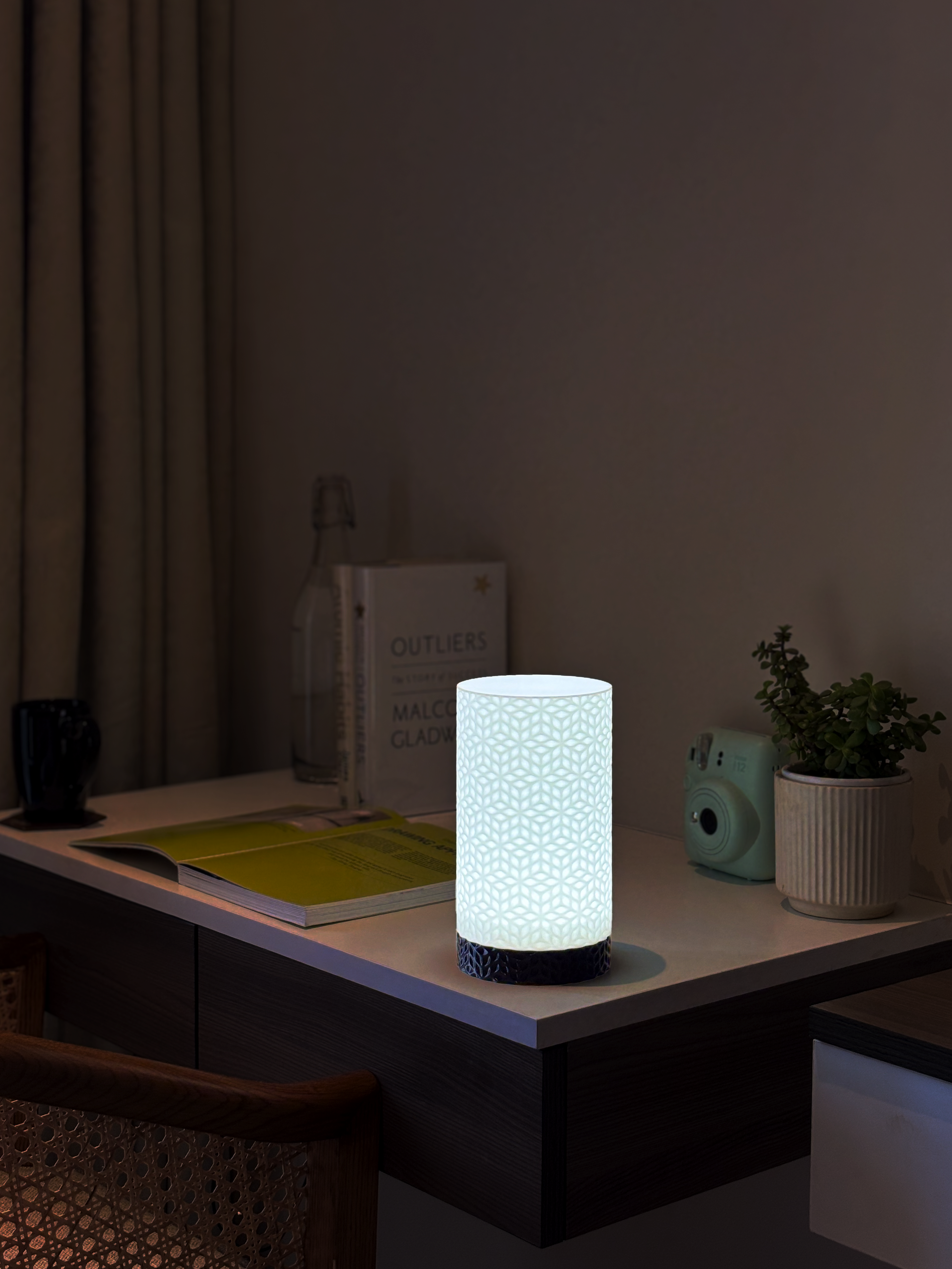
These are spaces built for relaxation, winding down, and connection. Warm light mimics the glow of a fireplace or candle, it slows the nervous system, flatters skin tones, and makes a space feel intimate and lived-in. A statement floor lamp or a pair of table lamps in this range can completely transform the mood of a room.
FoxCraft tip: Layer your lighting here. Combine a warm overhead fixture with a warm accent lamp to create depth - flat, single-source lighting is the enemy of atmosphere.
🍳 Kitchens & Home Offices → Go Neutral to Cool (3500K–4500K)
In task-driven spaces, you need clarity. Neutral to cool light sharpens focus, makes food prep safer, and reduces eye strain during long work sessions. This doesn't mean your kitchen has to feel sterile, the fixture itself (a warm brass pendant, a handcrafted ceramic shade) adds the visual warmth while the bulb delivers the functional brightness.
🛁 Bathrooms → It Depends on the Vibe
Here's where it gets interesting. For a spa-inspired retreat, stick with warm light (around 2700K–3000K). It's flattering, relaxing, and luxurious. For a primary bathroom where you're doing makeup or grooming, a neutral daylight bulb (around 4000K) will give you more accurate color rendering. Many designers use both: warm ambient lighting with a neutral strip above the vanity mirror.
The Mistake Most People Make
The biggest lighting mistake in home decorating isn't choosing the wrong shade or the wrong fixture. It's mixing color temperatures inconsistently within the same space.
Imagine a living room with a warm 2700K floor lamp next to a cool 5000K overhead fixture. The result is a visual discord that's hard to name but impossible to ignore. The room feels "off." Guests can't place why. You just know it doesn't feel right.
The fix is simple: pick a color temperature and commit to it within each room. Your eyes will thank you, and the space will feel curated rather than cobbled together.
A Word on Natural Light
Always consider your room's natural light before choosing bulbs. A north-facing room with cool, low natural light often benefits from warmer bulbs to compensate. A sun-drenched south-facing room, on the other hand, can carry a slightly cooler bulb without feeling cold.
At FoxCraft, we always ask clients one question before recommending lighting: "What time of day do you use this room most?" Morning light, afternoon warmth, and evening ambience all call for different solutions.
Our Go-To Lighting Layering Formula
No matter the room, we swear by this three-layer approach:
- Ambient lighting: The base layer. Ceiling fixtures, recessed lighting, or a chandelier that fills the room with general light.
- Task lighting: Targeted and functional. Under-cabinet lights, reading lamps, vanity strips.
- Accent lighting: The magic layer. Wall sconces, picture lights, LED strips that highlight architecture or artwork and create shadow and depth.
Getting all three layers right, and keeping them at a consistent color temperature, is what separates a "nice room" from a room that stops people in their tracks.
Conclusion
Lighting isn't just practical. It's emotional. It shapes how a room feels, how people move through it, and how long they want to stay. The warm vs. cool question doesn't have a universal answer, but it does have your answer, one that's tied to how you live, what you love, and the story you want your home to tell.
When in doubt, start warm. It's forgiving, flattering, and almost always feels like home.
Have a lighting question of your own? Browse our curated lighting collection at foxcraftdecor.com or drop us a message. We love helping you find the piece that makes a room click.


0 comments